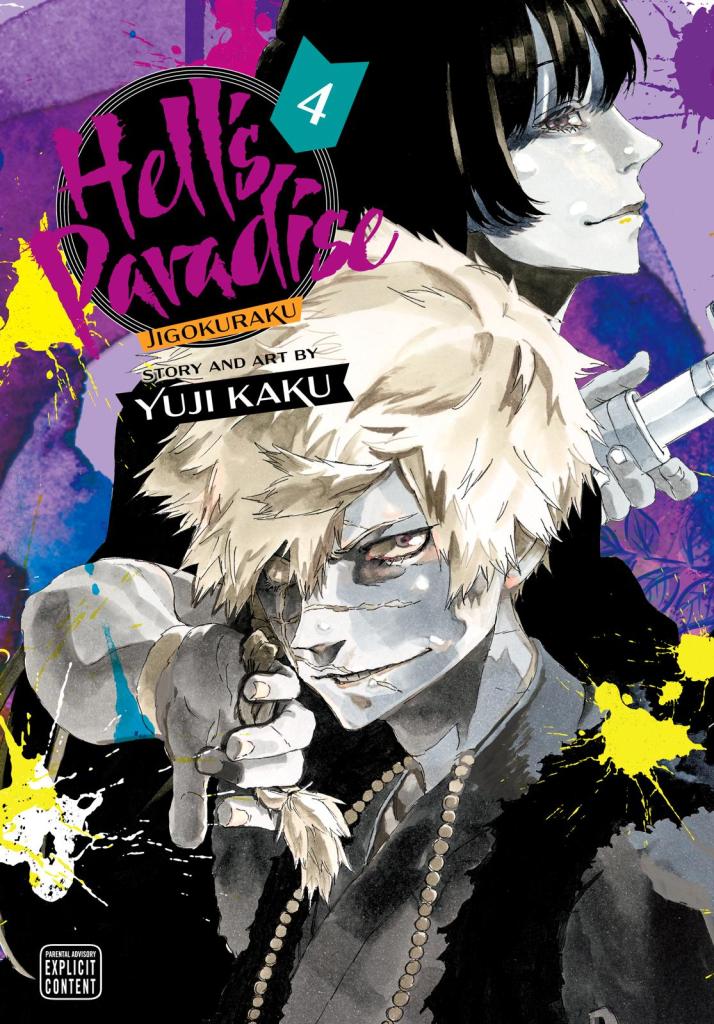
Hell’s Paradise: Jigokuraku Volume 4, by Yuji Kaku, was very good. This was the most entertaining volume for me personally. Gabimaru, after being rescued by Mei, encounters Tamiya and Fuchi. We see them interact and try to understand the Tao. At the same time Aza and his brother fight against one of the Tensen’s subordinates. We also get a lot more insight into how the Tensen train.
The art continues to be very well done. As this volume is very combat focused, the action scenes continue to be a highlight. I think that these are the best drawn combat scenes in the story so far. I really enjoy the backgrounds of the scenes as well, with them being very detailed. As I continue this story, I must note how the depictions of some of the Buddhist imagery, as twisted as they are in the monsters and how they fill some of the background of the panels really contribute visually to the dark mysterious tone of this manga.
The story this volume was well done. Some of the scenes, like the simultaneous explanations of the Tao, stood out massively in how good the dialogue was, and how impactful it was paired with the imagery of the individual scenes. The writing stood very tall this volume. The revelations made sense, and I really liked how well researched the explanation of the five meditation techniques were. One of the most appreciated parts of this manga for me are the explanations in the appendix of the volume of a lot of the things mentioned. I find it adds a lot to the story’s setting, as the history of things, especially cultures are interesting to me.
I liked seeing more of how Gabimaru’s wife and Sagiri affected his character, and we see a lot of this in his interactions with Mei. It was very interesting to see more of Aza and his adaptability being shown. It added a lot of depth to him. I do think that Gabimaru and Aza are being drawn up as parallels to each other, with Aza’s adaptability contradicting Gabimaru’s training, so I see them interacting in a meaningful way in the future. I would not be surprised to see them conflict with each other.
I liked how the Tensen were depicted this volume. The use of the explanation of the meditation techniques as a method of becoming stronger in the Tao retroactively added a lot more menace to the Tensen, as I saw them having sex in all their appearances as an indicator of their laxness. That this is an actual meditation technique, called Bochu Jutsu, in Taoism was surprising.
The way that Kaku managed to use the explanation of what Bochu Jutsu was, stood out as an interesting change of the usual way that sexual assault is threatened in stories. It felt more nebulous than usual due to the slow realization it evokes in the reader, and really put me in synch with the disgust the characters were feeling in that moment. It did not, however, prevent me from feeling put off on the use of this overused trope in manga. This was one of the better uses of it in my opinion though.
This volume was my personal favourite of the series. The writing and action were at their best for me. The way that this manga combines well researched mythology and culture with Shonen action and wraps it with a good story and excellent mystery stands out very strongly for me.
I’d give this volume a 4.8/5.
You can check out this volume on Amazon, via my affiliate link here.

 J'smangacritique